We’re living through the third great Internet revolution. After the birth of the web and the advent of cell phones, artificial intelligence is emerging as a transformative force of unprecedented scale. According to Demis Hassabis, founder of DeepMind and leader of AI R&D at Google, this revolution is “100 times stronger than the industrial revolution”, not only in terms of its potential impact, but above all in its speed of deployment. For marketing strategists, this means that the pace of adaptation is no longer annual or quarterly, but continuous.
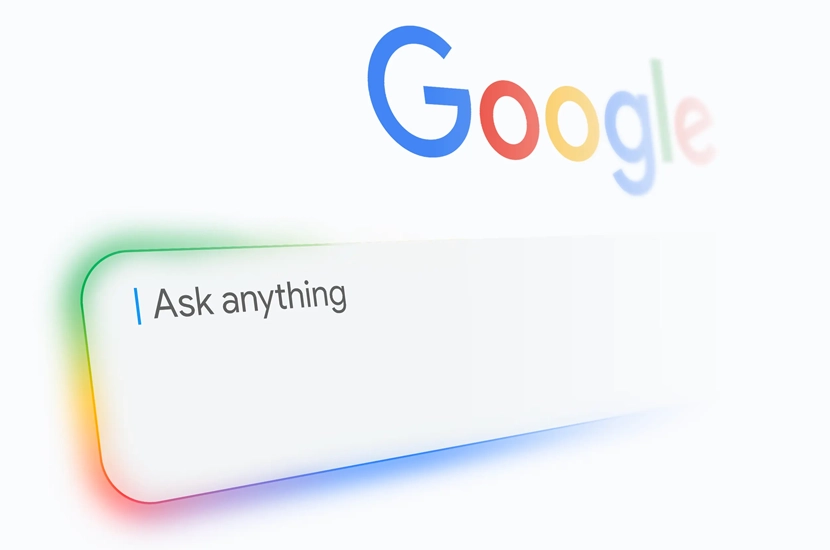
At the heart of this transformation is Google Search, which is transforming itself from an “information engine” into an “intelligence engine”. Faced with this transformation, traditional strategies are no longer sufficient. This article is based on a talk given by François Loviton, Managing Director of Google France, at the Digital Marketing Forum in December 2025. It shows that strategic management of partnerships and affiliation is becoming a non-negotiable condition for brands not only to survive, but above all to thrive in this new ecosystem.
The new face of Google Search: from information engine to intelligence engine
For any brand, understanding the fundamental transformation of Google Search is a strategic imperative. This is not a simple update, but a paradigm shift that redefines the rules of online visibility. 20 years ago, Google co-founder Larry Page imagined an engine capable of understanding the web and users’ intentions to provide them with the exact answer. Today, generative AI is turning that vision into reality.
Google’s mission remains the same – to provide relevant, quality answers you can trust – but the way it builds them has changed radically. The search engine has never been in such demand, with 5,000 billion queries a year. Even more revealing, every day, 15% of queries have never been asked before, confirming the existence of an “infinite reservoir” of curiosity that AI is now filling.
This transformation rests on two pillars that radically change the way users interact with search:
New ways of asking questions
The era of the keyboard is over. Queries are becoming richer and more contextual, thanks to image, voice and video.
- Visual search: its 70% year-on-year growth testifies to its massive adoption. Users ask complex questions based on a simple photo.
- Circle to Search: this usage is booming, accounting for almost 10% of Gen Z queries. Circle an item on the screen to launch a frictionless search.
New ways of responding
AI now synthesizes information to build direct, conversational answers
- AI Overviews & AI Mode: this suite of functions, powered by fast-moving models such as Gemini 3, offers intelligent summaries and conversational experiences. This approach has already won over 2 billion users.
- Web synthesis: these tools don’t just list links, they analyze and summarize relevant information from the whole web to respond directly to the user.
Contrary to initial fears, these innovations generate higher quality traffic. Users who click on a link after an AI synthesis spend more time on the destination site, and their satisfaction is higher. What’s more, in countries where these tools have been deployed for over a year, the overall volume of requests has increased by 10%.
These technological innovations are the catalyst for a profound change in user behavior, a territory that brands must now conquer.
Deciphering new user behaviors: the age of exploration
The real revolution lies not in technology, but in the new uses it engenders. Brands that ignore this transformation in behavior simply risk becoming invisible. Query analysis reveals three major evolutions.
- Longer searches: users are more descriptive. Queries of more than 8 words are experiencing spectacular growth, particularly in the banking/insurance (+23% ) and automotive (+16%) sectors.
- More complex searches: encouraged by AI’s ability to understand nuances, users formulate requests with multiple criteria, such as looking for a used car “with a new engine, sold by a professional, in such and such a geographical area”.
- More exploratory searches: this is the most strategic change. Users move up the conversion tunnel, from a transactional intent (“buy product X”) to a discovery and comparison phase. This behavior blurs the traditional lines between content marketing, SEO and performance. The user in “exploration” mode isn’t looking for a product page, but a holistic experience: reviews, tutorials, discussions. And that’s exactly what a solid network of partners can offer.
This phenomenon creates a virtuous circle of curiosity: more complex questions receive more intelligent answers, encouraging users to ask even more questions. This opens up an “infinite reservoir” of opportunities for brands to engage with their consumers well upstream of the purchase decision.
In this new dynamic, the mere presence of a brand on its own website has become insufficient. It is now imperative to master one’s digital ecosystem in the broadest sense.
The digital ecosystem as a strategic asset: the partnership marketing imperative
Since Google’s AI draws its answers from the entire digital universe, your partner ecosystem becomes your primary tool for training the AI to recognize your authority. Your brand’s reputation and presence beyond your own assets become your most powerful competitive advantage. This is where partnership marketing shifts from being a tactical option to a strategic imperative.
The importance of partnerships is based on an implacable logic:
- Your ecosystem is the corpus of AI: Google is explicit: it “draws on the entire digital universe to build its answers”. This essentially includes “your presence on video sites like YouTube, […] consumer review sites, [and] user forums”. These platforms are no longer mere channels, they are the primary data set from which AI forms its opinion.
- Partners shape your AI reputation: a positive mention in a product test on YouTube, glowing reviews on a specialized site or an expert response on a forum become authority signals that feed directly into AI Overviews and AI Mode responses. A partnership or affiliation strategy thus becomes an AI influence strategy.
Affiliate marketing redefined: the age of authority
In this context, the role of affiliate marketing is evolving. A partner is no longer just a source of final clicks. Their primary role is now that of an authority builder. The content they create (articles, videos, comparisons, etc.) serves as a third-party trust signal, which is essential for establishing your brand’s expertise in the eyes of artificial intelligence. The hierarchy of value has shifted: authoritative content takes precedence over direct conversion.
Now that this strategic ecosystem has been defined, here’s the practical roadmap for capitalizing on this new situation.
Operational roadmap: 3 pillars to thrive in the AI era
Here’s the concrete action plan your brand needs to implement today, based on direct recommendations from Google France management.
Understanding and grasping new uses
Your priority is to systematically analyze new queries emerging in your sector. Pay particular attention to exploratory queries. In this discovery phase, the brand becomes a crucial reference point. Your objective: to position your brand as a central response when consumers are not yet looking for a product, but for a solution, inspiration or comparison.
Strengthening and diversifying content
Rich, diversified content is the key to your future visibility. Your strategy should focus on three key areas:
- Your website, an exceptional “base camp”: upgrade your site to include content that meets exploratory intentions: buying guides, comparisons, feature articles and tutorials.
- Digital omnipresence: this is where your partnership strategy comes to life. Actively build your presence where AI draws its knowledge: video platforms like YouTube, consumer review sites and user forums.
- Multimodal content: guarantee the online presence of your offline assets. This includes information on your points of sale and catalogs, but also the distribution of your press releases and the digital relay of your events.
Rethinking digital marketing
The manual approach to managing keywords and ads is outdated. Adopt an automated approach via AI-powered advertising tools like Performance Max. These solutions are designed to interpret the weak signals and “the question behind the question” hidden in complex exploratory queries, a task that manual steering can no longer perform effectively.
These actions not only prepare us for the present of intelligent research, but also for its inevitable future: action.
From intelligence to action, get ready for the agentic Web
AI is not a threat to Google Search, but a limitless expansion of its capabilities. The next step is already here: the transition from an “intelligence engine” to an “action engine” thanks to agentic AI. Tomorrow, users will be able to ask AI to call stores to check the availability of a product, or to book a table at a restaurant.
This future isn’t science fiction, it’s the logical extension of today’s evolution. There is only one way to prepare your brand for it. The efforts you make today to strengthen your brand, diversify your content and, above all, build a robust ecosystem of digital partnerships are the fundamental investment that will ensure your relevance. It’s by becoming a trusted source of authority across the web that you’ll be ready for the day when AI acts, not just responds, on behalf of users.